

Training Structure
College of Sciences
Program
CHOICE 1
4 creditsChoose 2 out of 3
Supplementary Material on Solution Chemistry
2 creditsCrystallography I
2 creditsThermodynamics and Phase Equilibria
2 credits
Basics of Radioactivity
2 creditsPolymers
2 creditsSolution Chemistry Applied to Actinides
2 creditsAdvanced Inorganic Materials
2 creditsSolutions, Colloids, Interfaces
2 creditsLiquid NMR Spectroscopy and X-ray Diffraction
2 creditsChemometrics, statistical data analysis, experimental design
2 creditsMethodology for Characterizing Materials
2 creditsCoordination Chemistry and Organic Chemistry
2 creditsProfessional Projects – Project Management
8 credits
Chemistry at the Indicator Level - Radiochemistry
2 credits2-4-month internship (bibliography included)
10 creditsInnovative Synthesis and Extraction Processes
2 creditsRadiation Protection / Radiation-Matter Interaction
2 creditsOPTION 2
4 creditsChoose 2 out of 3
Fundamentals of Process Engineering
2 creditsHybrid and Structured Materials
2 creditsContainment Materials
2 credits
Liquid-Liquid Extraction: Kinetics and Thermodynamics
2 creditsHigh-Temperature Chemistry
2 creditsCommunication and Career Integration
2 creditsThe Fuel Cycle: From Mine to Waste Management
2 creditsCoordination Chemistry of f-Block Elements
2 credits
CHOICE 1
ECTS
4 credits
Training Structure
College of Sciences
Supplementary Material on Solution Chemistry
Level of Education
4-year college degree
ECTS
2 credits
Training Structure
College of Sciences
The purpose of this course on solution chemistry is to introduce the various concepts necessary for studying the complex liquid mixtures used in separative chemistry. The approach taken is primarily thermodynamic. In particular, the course explains the role of concentration effects, beyond the ideal laws that apply only to dilute solutions.
CM: 12:00 p.m.
TD: 8 H
Crystallography I
Level of Education
4-year college degree
ECTS
2 credits
Training Structure
College of Sciences
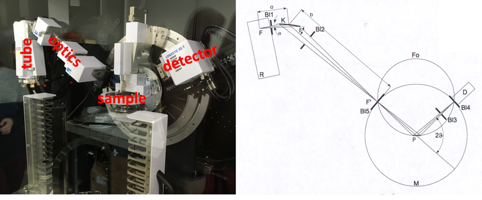
This lecture, delivered entirely in English, provides a basic introduction to crystallography and electron diffraction for beginners. X-ray diffraction is an important characterization technique in modern chemistry; the majority of crystalline structures in inorganic and organic solids have been determined using this method. It is therefore important for all students to understand its basic concepts and instrumentation. The course explains the principles of X-ray diffraction, along with the geometry and symmetry of X-ray patterns. In addition to the principles of interaction between X-rays and matter, it covers how to obtain quantitative intensities for single-crystal and powder diffraction patterns. It naturally includes an understanding of lattice planes and the concept of the reciprocal lattice, along with the construction of the Ewald sphere. Furthermore, it provides a basic understanding of the Fourier transform relationship between the crystalline structure and the diffracted intensities, as well as the concept of the reciprocal lattice.
Electron diffraction is a technique that complements X-ray diffraction and provides information on the symmetry and geometry of the materials under study. In this course, we will therefore explore the methods for obtaining electron diffraction patterns and interpreting them. We will be able to determine the lattice parameters, the reflection conditions, and the possible space groups.
This lecture also serves as an introduction to the lecture "Electron Microscopy and Crystallography II"
CM: 14
TD: 6
Thermodynamics and Phase Equilibria
Level of Education
4-year college degree
ECTS
2 credits
Training Structure
College of Sciences
Time of year
Fall
- Review of the thermodynamics of single-component systems.
- Fundamentals of thermodynamics for multicomponent systems. Chemical potential, the Gibbs-Duhem relation, variance.
- Overview of thermal analysis techniques used to construct binary and ternary phase diagrams: ATG, ATD, and DSC
- Construction and interpretation of binary phase diagrams based on thermodynamic variables. Gibbs free energy, pressure, and temperature diagrams as functions of the composition of the binary mixture. Liquid-liquid, liquid-vapor, and solid-liquid mixtures.
- Phase transitions: first- and second-order transitions, critical points. Examples.
- The supercritical state: definition, thermodynamic properties, and the most widespread industrial applications.
- Construction and interpretation of ternary phase diagrams: variance, definitions of ternary eutectics, first- and second-order peritectics, isothermal sections, and study of alloy cooling.
Hourly volumes*:
CM: 13
TD: 7
Basics of Radioactivity
Level of Education
4-year college degree
ECTS
2 credits
Training Structure
College of Sciences
Time of year
Fall
This course covers the various fundamental elements necessary for understanding natural and artificial radioactive phenomena. The goal is to establish a comprehensive understanding of concepts related to radioactive decay, natural radioactive families and their associated environmental impacts, dating methods, methods for producing radionuclides and their applications in various fields, as well as anthropogenic contributions. Various examples from fields such as industry, nuclear energy, radiochemistry, geochemistry, and nuclear medicine will be used to illustrate the basic concepts covered.
Hourly volumes*:
CM: 12:00 p.m.
TD: 8:00 a.m.
Polymers
Level of Education
4-year college degree
ECTS
2 credits
Training Structure
College of Sciences
Time of year
Fall
Polymers are all around us: we eat them, we wear them, and we build extremely complex structures out of them. From mature technologies to the most innovative materials, polymers are a crucial building block for shaping the world of tomorrow. In this course, we will cover several topics, including the controlled synthesis of polymers and cross-linked materials, surface modification using polymers, some characterization tools suited for polymers, and, finally, a section on the latest advances involving polymers.
Hourly volumes*:
CM: 1:00 p.m.
TD: 7:00 a.m.
Solution Chemistry Applied to Actinides
Level of Education
4-year college degree
ECTS
2 credits
Training Structure
College of Sciences
A general overview of the chemistry of actinide elements in aqueous solution will be presented, covering concepts such as thermodynamics and kinetics, redox potentials, hydrolysis, and complexation. To illustrate these concepts, specific examples from industry, recycling, and the environment will be discussed.
Hourly volumes*:
CM: 11:00 a.m.
TD: 9 a.m.
Advanced Inorganic Materials
Level of Education
4-year college degree
ECTS
2 credits
Training Structure
College of Sciences
Time of year
Fall
The HAC720C module covers “advanced inorganic materials” in five main sections. Thefirst section is devoted to general principles of inorganic materials and addresses structure-property relationships; particular attention is given to chemical bonding, the real crystal, and polycrystalline solids; the various classes of inorganic materials are described. Thesecond part focuses on ceramic materials (definitions and properties) and their synthesis (raw materials, including clays; shaping; drying and debinding; sintering); a distinction is made between traditional ceramics and technical ceramics (synthesis routes for oxide and non-oxide ceramics). Part3 covers glasses (classification and synthesis methods) and glass-ceramics (devitrification and soft chemistry); their properties and applications are also discussed. Part4 is dedicated to metals: properties of metals and metal alloys; metal nanoparticles; and catalytic materials. Part5 is devoted to inorganic materials developed for energy applications; ceramics (oxide and non-oxide; nanostructured) and metal hydrides are described (properties and synthesis) through several examples and in the context of their applications (batteries, hydrogen storage, and carbon dioxide capture).
Hourly volumes*:
CM: 1:00 p.m.
TD: 7:00 a.m.
Solutions, Colloids, Interfaces
Level of Education
4-year college degree
ECTS
2 credits
Training Structure
College of Sciences
This course unit provides students with foundational knowledge and cross-disciplinary skills in the field of colloids and interfaces, which are common to the various tracks within the Master’s in Chemistry program (Materials Chemistry, Separation Chemistry, Materials and Processes, ICAP Cosmetic Engineering, and Biomolecular Chemistry). It is also offered to international students enrolled in the SFRI program at the University of Montpellier, where instruction is conducted in English. An introductory presentation covering basic notions and concepts will help students discover and better understand the main physicochemical properties of colloidal dispersions, associative colloids, and macromolecular solutions, as well as the parameters and phenomena governing stability in colloidal dispersions and mixed solution-colloid systems. Next, an interdisciplinary practical course based on the flipped classroom model will be offered to help students build and deepen their knowledge through individual and group analysis of the various applications of colloidal and interfacial phenomena and systems.
Hourly volumes*:
CM: 7
TD: 13
Liquid NMR Spectroscopy and X-ray Diffraction
Level of Education
4-year college degree
ECTS
2 credits
Training Structure
College of Sciences
NMR:
Liquid-phase NMR (Nuclear Magnetic Resonance) is an essential spectroscopic analytical method for chemists, enabling, in particular, the determination of the structure of small organic molecules or macromolecules in solution, as well as the study of dynamic phenomena... The objective of this course unit is to understand the phenomena involved in this technique and to relate them to the various structural insights provided by this method. The goal is to be able to interpret the spectral data obtained from this analysis to elucidate the structure and stereochemistry of organic molecules or the structures of polymers, or to monitor reactions.
X-ray diffraction:
X-ray diffraction is a powerful, non-destructive technique for characterizing the crystalline structure of materials; it is also capable of providing crystallographic and structural information, such as lattice parameters and atomic positions. This includes all crystalline materials, such as ceramics, materials for energy and information storage and processing, as well as organic molecules and metal complexes (interatomic distances and angles, stereochemistry (chirality, stereoisomerism, etc.), intra- and intermolecular bonds, etc.). The objective of this course unit is to provide an introduction to crystallography and diffraction, with the goal of understanding the operation and characteristics of an X-ray diffractometer, as well as interpreting diffraction patterns (structural analysis, lattice parameters).
Hourly volumes*:
CM: 10
TD: 10
Chemometrics, statistical data analysis, experimental design
Level of Education
4-year college degree
ECTS
2 credits
Training Structure
College of Sciences
This course unit will cover the fundamental concepts and practical tools of chemometrics through: - statistical data analysis;
- the laws of probability;
- confidence interval estimation;
- parametric and nonparametric tests.
An introduction to experimental design will be offered at the end of the module.
Hourly volumes*:
CM: 7 a.m.
TD: 1:00 p.m.
Methodology for Characterizing Materials
Level of Education
4-year college degree
ECTS
2 credits
Training Structure
College of Sciences
Time of year
Fall
The syllabus for this course unit focuses on describing the principles and applications of the main methods used for the structural characterization of solids, thin films, surfaces, and interfaces, as well as several examples of their applications in materials chemistry. It covers the following techniques.
- Introduction to Solid-State NMR (NMR Signals, Interactions in Solid-State NMR, Magic-Angle Rotation, NMR Sequences, Cross-Polarization, Instrumentation, etc.)
- Electron microscopy: principles and applications of scanning and transmission electron microscopy and related techniques (EDS microanalysis).
- Spectroscopic methods: Raman spectroscopy, photoelectron spectroscopy, X-ray spectroscopy (XAS, XRF, etc.), Mössbauer spectrometry.
Hourly volumes*:
CM: 10 a.m.
TD: 10 a.m.
Coordination Chemistry and Organic Chemistry
Level of Education
4-year college degree
ECTS
2 credits
Training Structure
College of Sciences
This course is designed to build on the fundamentals of organic chemistry and coordination chemistry covered in the third year of the bachelor’s program and to introduce concepts related to molecular engineering and molecular chemistry. The course consists of lectures and tutorials. Students will prepare for certain lectures and tutorials using provided course materials, enabling them to actively participate in class and tutorials, understand the concepts presented, and acquire the necessary skills. A study plan and related activities will be provided. For students who have not covered the fundamentals of coordination chemistry and organic chemistry, relevant materials will be made available.
Coordination Chemistry: The course will cover various aspects of transition metal and lanthanide complexes, molecular materials (polynuclear complexes and coordination polymers with extended structures, such as MOFs, etc.), as well as their properties and applications. Structural aspects, bond characterization, properties, and issues related to stability and reactivity will be addressed. Emphasis will be placed on the complexation effect and the stability of complexes of metals, lanthanides, and actinides with certain ligands, with a view to applications in the biomedical field (imaging and therapy), decontamination (nuclear field), etc. The electronic properties (relaxivity, magnetism) and optical properties (absorption, luminescence) of these complexes will be discussed and placed in the context of applications in various fields, such as imaging, electronics, sensors, etc.
Organic Chemistry: This course builds on the knowledge acquired during the Bachelor’s program and will provide a systematic study of the main reaction mechanisms in organic chemistry, establishing a common foundation for all students in the Master’s in Chemistry program. The main processes (substitution, addition, elimination, transposition, etc.) and their essential characteristics and applications to mechanistic sequences will be examined. This course is designed to equip students with general tools for analyzing mechanisms (ionic, radical, and concerted) so they can understand these mechanisms in all their variety.
Hourly volumes*:
CM: 1:00 p.m.
TD: 7 H
Professional Projects – Project Management
Level of Education
4-year college degree
ECTS
8 credits
Training Structure
College of Sciences
Time of year
Fall
The professional project bridges the gap between traditional practical work and laboratory or industry internships. It takes the form of a supervised project in which students are placed in a professional setting through collaborative (group) work based on the completion of a project addressing a problem identified by a company, local government, nonprofit organization, or academic institution. It is part of the core curriculum of the Master’s in Chemistry and is carried out under the supervision of a faculty member or industry professional serving as a mentor. Conducted throughout the semester, this project aims to integrate and reinforce the knowledge and skills acquired during the undergraduate and early Master’s programs through this professional scenario. These real-world scenarios will be directly related to the Master’s track chosen by the students. In addition to disciplinary skills in chemistry, students will also acquire interpersonal, organizational, and communication skills—which are intrinsically linked to project management—thereby equipping them for their future professional careers.
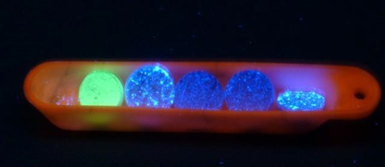
Addressing a research problem: an example of the synthesis of new phosphorescent materials.
Hourly volumes*:
CM: 5 hours
TD: 5 hours
Practical Training: 40 hours
Chemistry at the Indicator Level - Radiochemistry
Level of Education
4-year college degree
ECTS
2 credits
Training Structure
College of Sciences
This course covers various aspects of radiochemistry and chemistry at the tracer level. After describing the chemical properties of radioelements and discussing the scaling factors associated with the use of radioelements/radionuclides at the tracer level, the concepts of microcomponents and macrocomponents will be addressed, along with the kinetic and thermodynamic effects on reaction kinetics. Next, the various commonly used radiochemical methods will be introduced: extraction and purification methods, the use of radioactive stocks, methods such as electrodeposition, co-crystallization, or entrainment precipitation, as well as isotopic labeling and dilution.
Hourly volumes*:
CM: 12:00 p.m.
TD: 8:00 a.m.
2-4-month internship (bibliography included)
Level of Education
4-year college degree
ECTS
10 credits
Training Structure
College of Sciences
A 2- to 4-month internship must be completed in a research laboratory or a company specializing in extractive or separative chemistry, recycling chemistry, radiochemistry, materials chemistry, or process chemistry. Students will thus have the opportunity to complete this capstone internship in academic research laboratories or industrial facilities. Subject to prior approval by the faculty (the internship topic must be related to the master’s program curriculum, and the environment and resources must be adequate), students may seek a host team in an academic setting at the institutes of the Chemistry Cluster at the University of Montpellier, in academic laboratories outside the University of Montpellier (in France or abroad), or in the private sector (in France or abroad).
This internship, which lasts 2 to 4 months, may begin in early May and will be preceded by the submission of a bibliographic report related to the internship topic and an oral defense before a panel.
Innovative Synthesis and Extraction Processes
Level of Education
4-year college degree
ECTS
2 credits
Training Structure
College of Sciences
This course is shared among MI students in the Master’s in Chemistry program: ICAP P1, ICAP P2, MAT P1, MAT P2, and BM (second semester). The following topics will be covered:
- The 12 Principles of Green Chemistry and Units of Measurement in Green Chemistry;
- Synthesis Strategies in Sustainable Chemistry;
- Alternative or environmentally friendly solvents for synthesis and extraction;
- Unconventional Activation Techniques and Applications.
CM: 13
TD: 7 H
Radiation Protection / Radiation-Matter Interaction
Level of Education
4-year college degree
ECTS
2 credits
Training Structure
College of Sciences
In the first part of this course unit, a general overview of radiation-matter interactions will be presented, covering the various types of interactions and their associated detection methods. The second part will cover all aspects of radiation protection, focusing on the effects of radiation on living matter as well as appropriate protective measures for humans and the environment.
Hourly volumes*:
CM: 12:00 p.m.
TD: 8:00 a.m.
OPTION 2
ECTS
4 credits
Training Structure
College of Sciences
Fundamentals of Process Engineering
Level of Education
4-year college degree
ECTS
2 credits
Training Structure
College of Sciences
The goal of this course is to enable students with a background in chemistry to understand the fundamentals of process engineering.
The course consists of two main parts, both of which are illustrated by the same process.
In the first part of the course, a drying process will be used to introduce the most common heat and mass transfer phenomena encountered in process engineering, from which the dimensionless numbers can be derived. In the second part, the thermodynamic properties of air/water vapor mixtures will be used to derive basic sizing rules for the same drying process.
This course will be taught entirely in English.
Hourly volumes*:
CM: 10
TD: 10
Hybrid and Structured Materials
Level of Education
4-year college degree
ECTS
2 credits
Training Structure
College of Sciences
"Hybrid" materials constitute a new class of materials that combine organic ligands linking inorganic units; they are being studied more and more, both from a fundamental and an applied perspective.
In this course unit, two main categories of hybrid materials will be covered:
- Coordination Networks and Metal-Organic Frameworks
- Organosilicon/carbon materials
CM: 10 a.m.
TD: 10 a.m.
Containment Materials
Level of Education
4-year college degree
ECTS
2 credits
Training Structure
College of Sciences
This course will provide a general overview of confinement materials by addressing the desired performance properties, the different classes of confinement matrices, and the associated synthesis methods. It will also describe the structure-property relationships related to the confinement of radionuclides and/or toxic chemical elements. The materials covered will include glass, glass-ceramics, and ceramics.
Hourly volumes*:
CM: 12:00 p.m.
TD: 8:00 a.m.
Liquid-Liquid Extraction: Kinetics and Thermodynamics
Level of Education
4-year college degree
ECTS
2 credits
Training Structure
College of Sciences
A general approach to liquid-liquid extraction will be developed through the concepts of thermodynamics and kinetics, with the aim of understanding the mechanisms responsible for extraction as well as the processes occurring at the liquid-liquid interface. The fundamental aspects of other types of extraction (liquid-solid, supercritical fluid extraction, and distillation) will also be covered.
Hourly volumes*:
CM: 12:00 p.m.
TD: 8:00 a.m.
High-Temperature Chemistry
Level of Education
4-year college degree
ECTS
2 credits
Training Structure
College of Sciences
In this course, a general overview of chemistry in non-aqueous solvents at high temperatures will be presented through concepts such as chemical reactivity and the physicochemical and thermochemical properties of oxides, salts, and molten metals. Several case studies will be discussed, particularly those related to the fuel cycle and recycling chemistry.
Hourly volumes*:
CM: 12:00 p.m.
TD: 8:00 a.m.
Communication and Career Integration
Level of Education
4-year college degree
ECTS
2 credits
Training Structure
College of Sciences
This learning unit will explore, in small groups or through individualized instruction, educational tools and best practices related to communication and career integration, through:
- assessments of knowledge, skills, competencies, interpersonal skills, and motivation;
- raising awareness of job-search techniques;
- CV and cover letter writing;
- rules for oral and written communication;
- mock job interviews.
Practical exercises directly related to the industries targeted by the students’ respective programs will be offered.
TP: 8:00 p.m.
The Fuel Cycle: From Mine to Waste Management
Level of Education
5 years of post-secondary education
ECTS
2 credits
Training Structure
College of Sciences
Time of year
Spring
This course covers the various aspects of the current fuel cycle and future nuclear cycles. The course will cover, in sequence, concepts related to the front end of the cycle (mineral resources, uranium extraction and purification, isotopic enrichment), the passage of fuel through nuclear reactors, and the back end of the cycle (reprocessing of spent fuel, recycling of recoverable materials and fuel remanufacturing, and management of final nuclear waste). This will be followed by a discussion of several aspects related to future nuclear fuel cycles, including the use of unconventional resources, advanced separation concepts, and the development of fourth-generation reactors.
Hourly volumes*:
CM: 3:00 p.m.
TD: 5 hours
Coordination Chemistry of f-Block Elements
Level of Education
4-year college degree
ECTS
2 credits
Training Structure
College of Sciences
A general overview of the coordination chemistry of the f-elements will be presented through the concepts of atomistics, oxidation state, and coordination polyhedra, with the aim of highlighting the specific characteristics of the f-elements. Direct comparisons will be made with the coordination chemistry of transition metals, and applications related to nuclear chemistry will be discussed.
Hourly volumes*:
CM: 12:00 p.m.
TD: 8:00 a.m.
Admission
Registration Procedures
Applications can be submitted through the following platforms:
- French and European students: Follow the “Mon Master” procedure on the website:https://www.monmaster.gouv.fr/
- International students from outside the EU: Follow the “Études en France” procedure:https://pastel.diplomatie.gouv.fr/etudesenfrance/dyn/public/authentification/login.html