

Training Structure
College of Sciences
Program
Crystallography I
2 creditsThermodynamics and Defects in Solids M1
5 creditsInorganic materials
Surface Properties M1
3 creditsCrystallography II and Electron Microscopy
6 creditsThin Films and Extreme Conditions M1
3 creditsMaterials for Catalysis M1
3 creditsQuantum Mechanics and Modeling I
5 credits
Metallurgical and Electronic Properties
5 creditsResearch Internship
10 creditsProject Internship
3 creditsQuantum Mechanics and Modeling II
7 creditsCrystallography, crystal chemistry, large-scale facilities
5 credits
Crystallography I
Level of Education
4-year college degree
ECTS
2 credits
Training Structure
College of Sciences
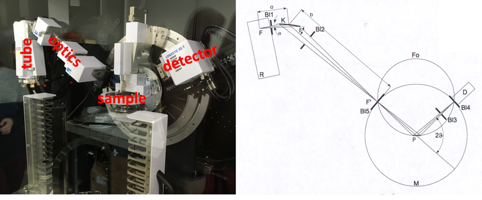
This lecture, delivered entirely in English, provides a basic introduction to crystallography and electron diffraction for beginners. X-ray diffraction is an important characterization technique in modern chemistry; the majority of crystalline structures in inorganic and organic solids have been determined using this method. It is therefore important for all students to understand its basic concepts and instrumentation. The course explains the principles of X-ray diffraction, along with the geometry and symmetry of X-ray patterns. In addition to the principles of interaction between X-rays and matter, it covers how to obtain quantitative intensities for single-crystal and powder diffraction patterns. It naturally includes an understanding of lattice planes and the concept of the reciprocal lattice, along with the construction of the Ewald sphere. Furthermore, it provides a basic understanding of the Fourier transform relationship between the crystalline structure and the diffracted intensities, as well as the concept of the reciprocal lattice.
Electron diffraction is a technique that complements X-ray diffraction and provides information on the symmetry and geometry of the materials under study. In this course, we will therefore explore the methods for obtaining electron diffraction patterns and interpreting them. We will be able to determine the lattice parameters, the reflection conditions, and the possible space groups.
This lecture also serves as an introduction to the lecture "Electron Microscopy and Crystallography II"
CM: 14
TD: 6
Thermodynamics and Defects in Solids M1
Level of Education
4-year college degree
ECTS
5 credits
Training Structure
College of Sciences
This module is designed to provide basic knowledge of the thermodynamics of defects. Understanding the basic concepts of defects in stoichiometric and non-stoichiometric solids is essential for better understanding and designing materials for ionic and electronic conductivity, with particular relevance to energy materials. The lecture introduces and discusses the nature of point defects that disrupt the perfect geometry of ideal crystal structures:
- Introduction to point defects (missing or misplaced atoms, ions, or electrons)
- Discussion of Thermodynamic Concepts Related to Order-Disorder Phenomena in Solid Solutions
- Understanding Brouwer diagrams for oxides in order to highlight the role of the surrounding atmosphere on defect equilibrium at high temperatures.
- This study investigates the diffusion pathways and energies of ions and electrons—a major consequence of point defects—that give rise to electrical transport in ionic conductors.
- This paper describes experimental investigations into the measurement of ionic conductivity as a function of temperature. The method of impedance spectroscopy measurements is discussed.
- Presentation of the Kröger-Vink Notation for Defects
- Mott-Hubbard insulators
Hourly volumes*:
CM: 24
TD: 12
Inorganic materials
Level of Education
4-year college degree
Training Structure
College of Sciences
This module will be divided into three parts:
- General introduction: main classes of materials, relationship between properties and structure of materials
- Construction and interpretation of phase diagrams: binary (e.g., for metallic and ceramic alloys)
- Construction and interpretation of ternary phase diagrams: variance, ternary eutectic definitions, first- and second-order peritectics, isothermal section, study of alloy cooling.
Hourly volumes*:
CM: 5:00 p.m.
TD: 8:00 a.m.
Surface Properties M1
Level of Education
4-year college degree
ECTS
3 credits
Training Structure
College of Sciences
This course provides comprehensive knowledge and tools related to the surface properties and interfacial behavior of crystalline and amorphous solids in various media. It consists of two parts: (1) Fundamentals of Colloid and Surface Science, and (2) Divided and Porous Solids
(2) Surface characterization techniques and surface analysis
Hourly volumes*:
CM: 5:00 p.m .
TD: 8 a.m.
Crystallography II and Electron Microscopy
Level of Education
4-year college degree
ECTS
6 credits
Training Structure
College of Sciences
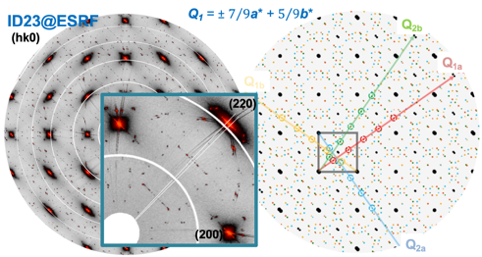
The structural characterization of materials is a mandatory prerequisite for developing functional materials and an absolute necessity for materials science researchers and engineers. To interpret diffraction patterns, structures, microstructures, and so on, a detailed understanding of crystallography, structural analysis, and the instruments used is essential. This knowledge is built from the ground up, gradually leading to an understanding of how to characterize materials using both standard and sophisticated diffraction methods. The course also includes laboratory work on powder and single-crystal diffractometers, enabling students to acquire the skills needed to correctly use and interpret diffraction data. Thefirst-semester portion of the course focuses primarily on X-ray diffraction and electron microscopy, while the crystallography component continues in thesecond semester with topics such as symmetry, structure determination, and structure refinement, as well as neutron scattering and magnetic structure analysis.
This lecture consists of two parts:
(1): Crystallography: Simple inorganic structures: basics & concepts, Fractional atomic coordinates and projections, Bravais lattices, Crystal systems, Lattice points, lines, and planes, Miller indices, Zone equation, Wulff net, orienting matrix, Crystal growth and morphology, X-ray sources, interaction of X-rays, electrons, and neutrons with matter, scattering lengths, structure factor, systematic extinctions, Debye-Waller factor, principles of scattering, reciprocal lattice, concept of the Ewald sphere, Laue diffraction, Debye-Scherrer camera, powder diffractometers, single-crystal diffractometers, monochromators, detectors, resolution, stereographic projection, peak intensities, reflection profile broadening, and grain size,
(2): Electron microscopy:
In this section, we will focus on electron microscopy through flipped classroom sessions. We will discuss the following topics: electron sources, lenses and aberrations, sample preparation, electron diffraction, structural and chemical analysis, and imaging techniques.
Hourly volumes*:
CM: 34
TD: 18
Thin Films and Extreme Conditions M1
Level of Education
4-year college degree
ECTS
3 credits
Training Structure
College of Sciences
This course consists of a series of lectures on the synthesis and characterization of thin films for technological applications or academic research. It is supplemented by an introduction to synthesis techniques for compounds that are stabilized under high pressure or are only available under special conditions.
- Physics of Low-Dimensional Systems
- Quantum confinement
- Quantum Wells, 1D Quantum Wires, 0D Quantum Dots
- Electron Confinement and the Density of States (DoS) Formalism
- Epitaxial films
- Microstructure
- Dislocations and Grain Boundaries
- Coatings and Applications
- Diffusion barriers
- Photo-optical devices
- Vacuum Technology
- High-pressure synthesis
Synthesis of Compounds with Unusual Valence and Coordination States
Hourly volumes*:
CM: 17
TD: 8
Materials for Catalysis M1
Level of Education
4-year college degree
ECTS
3 credits
Training Structure
College of Sciences
Thermodynamic and kinetic principles for understanding the optimal conditions for catalytic reactions and the requirements for catalyst activity and accessibility.
Methods for the preparation of porous and dispersed catalysts using nucleation-growth, aggregation, and templating mechanisms.
Correlations between the structural properties and activity of heterogeneous catalysts.
Examples of the application of heterogeneous catalysts in refining and industrial chemistry processes.
Next, basic concepts of photocatalysis and electrocatalysis are explored
Hourly volumes*:
CM: 5:00 p.m .
TD: 8 a.m.
Quantum Mechanics and Modeling I
Level of Education
4-year college degree
ECTS
5 credits
Training Structure
College of Sciences
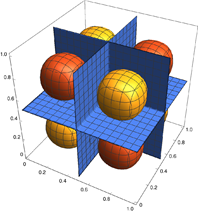
Wave function of an excited electron trapped in a cubic box: a model for a quantum dot state
- Introduction to basic concepts in quantum physics and their relationship to chemistry, modern materials science, and the engineering of nanodevices.
- To achieve the goals of this course, a mathematically rigorous approach is combined with a physical interpretation of the concepts, and the application of the most important quantum mechanical models to electronic and magnetic spectroscopies and chemistry is illustrated.
Hourly volumes*:
CM (Readings):24 hours
TD (Tutorials): 12 hours
Metallurgical and Electronic Properties
Level of Education
4-year college degree
ECTS
5 credits
Training Structure
College of Sciences
This course unit is designed to provide an introduction to the electronic properties of bulk and/or nanomaterials in the solid state, the magnetic properties of transition metal oxides, and so on. This unit is taught by various guest lecturers from outside UM, and the topics may vary depending on the respective areas of expertise of the instructors.
Students should become familiar not only with the electronic properties and ordering of materials, but also with ionic and mixed electronic-ionic conductors, as well as materials for spintronics. Another aspect here concerns their specific characterization using neutron/synchrotron diffraction, as well as complementary macroscopic characterization methods for magnetism, permeability, etc.
Hourly volumes*:
CM: 30 hours
TD: 3:00 p.m .
Research Internship
Level of Education
4-year college degree
ECTS
10 credits
Training Structure
College of Sciences
This module is dedicated to an internship lasting at least 3 months in a research laboratory or an industrial setting.
Project Internship
Level of Education
4-year college degree
ECTS
3 credits
Training Structure
College of Sciences
Preparation for the 3-month research internship, including exploring the state of the art of the project, establishing optimal experimental conditions, and presenting the work to a panel.
Quantum Mechanics and Modeling II
Level of Education
4-year college degree
ECTS
7 credits
Training Structure
College of Sciences
This course provides a comprehensive description of the structural, electronic, and vibrational properties of molecules, along with a quantum treatment of these properties in computer simulations.
At the same time, the structural and electronic properties of solids are examined, with an emphasis on the properties of metals and semiconductors.
Hourly volumes*:
CM: 42H
TD: 9:00 p.m.
Crystallography, crystal chemistry, large-scale facilities
Level of Education
4-year college degree
ECTS
5 credits
Training Structure
College of Sciences
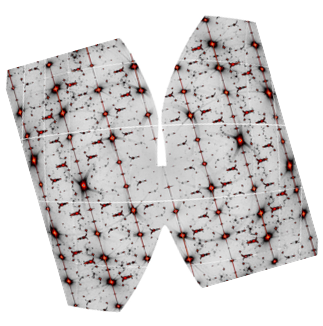
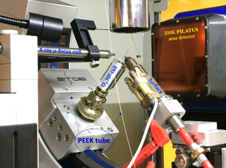
This lecture is a continuation of thefirst-semester crystallography course and will provide an advanced overview of structural characterization and structure refinement. It covers classical X-ray laboratory data collection and analysis, supplemented by synchrotron and neutron diffraction data analysis (powder and single crystal). The goal is to become familiar with the general principles of structure analysis, taking advantage of the complementary nature of X-ray and neutron diffraction. The course provides detailed knowledge on how to understand and analyze phase transitions and how to address the corresponding changes in the metric, associated data, and structural transformations.
This lecture covers the following topics:
- Symmetry and space groups
- Introduction to Structure Refinement (Single-Crystal and Powder Methods)
- Neutron and synchrotron facilities
- Magnetic Structures Using Neutron Diffraction
- Structure determination from single crystals (experiment and theory)
- Structure Determination from Powder Diffraction Data (Experiment and Theory)
- Applications of Fourier series to structure determination and refinement: from the Patterson method to difference Fourier analysis
- Crystal twinning,
- Phase Transitions
- Anomalous scattering and determination of absolute structure
Hourly volumes*:
CM: 30
TD: 15