

Level of Education
4-year college degree
ECTS
8 credits
Training Structure
College of Sciences
Description
A professional practicum for M1 ICAP student apprentices, who will carry out a project addressing an industrial challenge. This project will be conducted under the supervision of a faculty member or industry mentor. Conducted throughout the semester, this project aims to apply the knowledge and skills acquired during the undergraduate and early Master’s programs. In addition to disciplinary skills in chemistry, students will also develop interpersonal, organizational, and communication skills—which are intrinsically linked to project management—thereby preparing them for their future professional careers.
_346x584.jpg)
Example of an industrial challenge: evaluation of the oxidative stability of fragrance ingredients in the presence of antioxidants
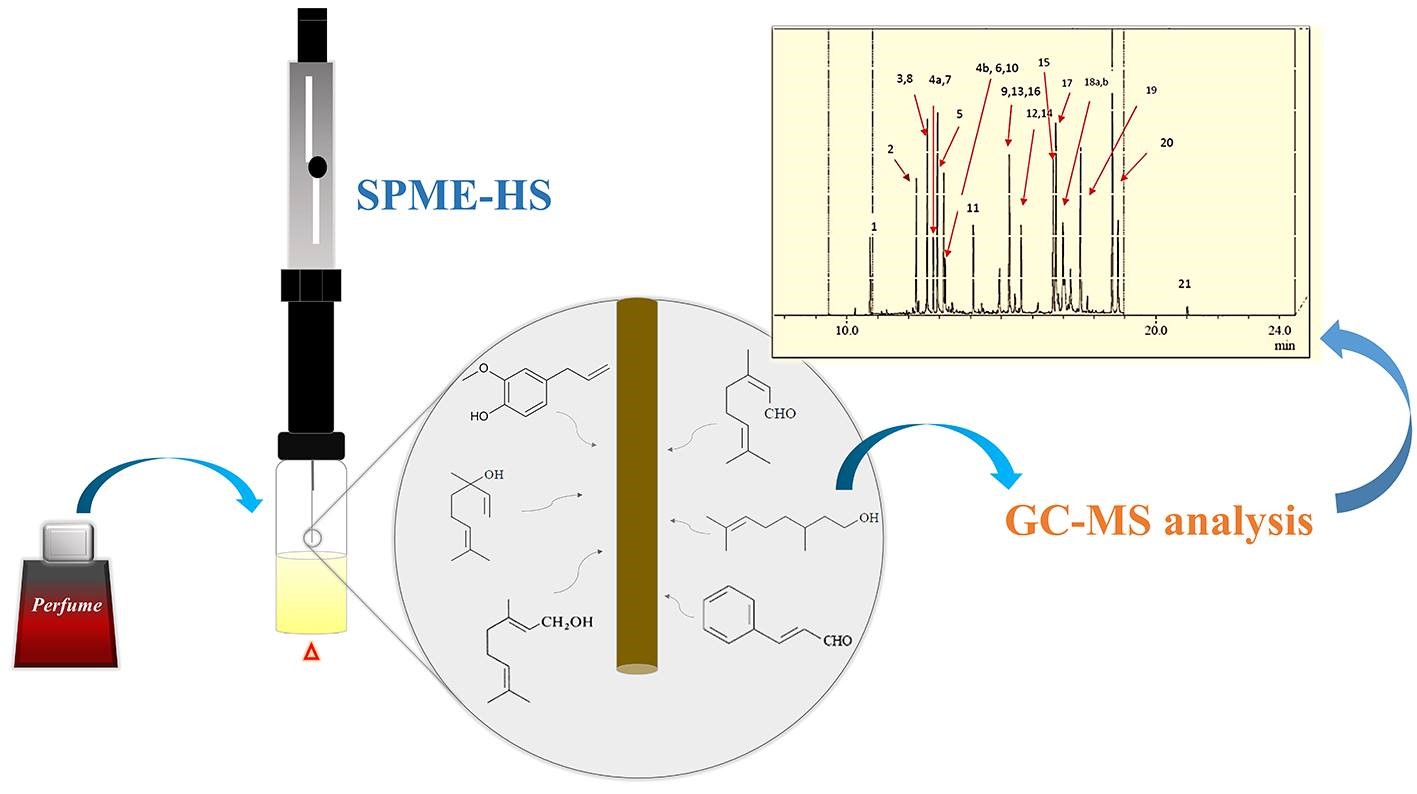
Example of an industrial challenge: Allergen analysis in fragrances: Solid-phase microextraction (SPME) of headspace (HS) followed by analysis via gas chromatography coupled with mass spectrometry (GC-MS)
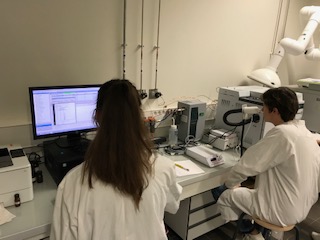
Examples of industrial challenges: detection and identification of compounds responsible for off-flavors using gas chromatography coupled with olfactometry
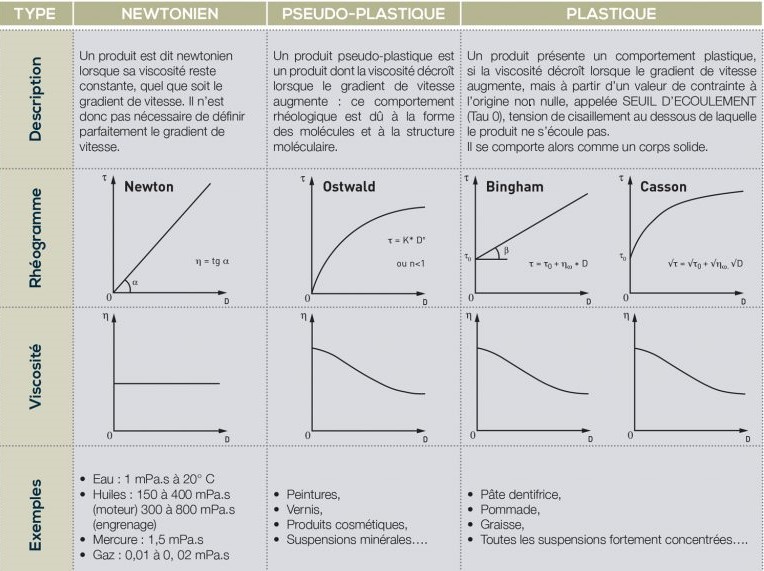
Examples of industrial challenges: Understanding and knowing how to use the essential physicochemical analysis techniques employed in the inspection of a finished product
Hourly volumes*:
CM: 5 hours
TD: 5 hours
Practical Training: 40 hours
Objectives
The objectives related to the apprentice’s career plans:
- Knowing how to address an industrial challenge.
- Be able to place this issue within a broader context and in relation to the current state of the art.
- Be able to develop a set of specifications related to the problem at hand and propose innovative solutions.
- Develop a design of experiments in collaboration with the other members of the group.
- Manage your own safety and that of others; act as a responsible chemist.
- Implement safety measures appropriate for a formulation or synthesis
- Master extraction, analysis, characterization, and formulation techniques across various fields to successfully complete the project assigned to them.
- Be able to analyze and interpret data, conduct a critical analysis of the results obtained in relation to the initial objectives and the state of the art, and be able to adapt one’s approach based on successes and failures.
- Present the project's findings in a scientific report or technical paper and deliver an oral presentation to a panel of judges.
Class Hours
- Professional Projects – Apprentice Project Supervision - Practical WorkPractical Work40 hours
- Professional Projects – Apprentice Project Supervision - TutorialsTutorials5 hours
- Professional Projects – Apprentice Project Oversight - CMLecture5 hours
Mandatory Prerequisites
Bachelor's degree in Chemistry, Physics and Chemistry, or Chemistry and Biology
Knowledge Assessment
100% Continuous, Comprehensive Monitoring
Course Outline
Formulation
Extraction
Analytical Techniques
Regulations
Control
Standard
Applications
Fragrances, Flavors, and Cosmetics
Additional Information
Administrative contact(s):
Master's in Chemistry Office
https://master-chimie.edu.umontpellier.fr/