

Level of Education
5 years of post-secondary education
ECTS
6 credits
Training Structure
College of Sciences
Description
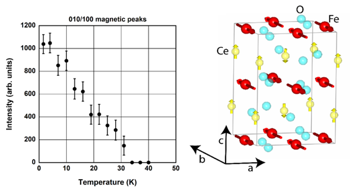
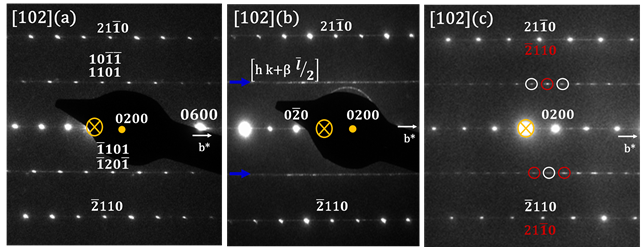
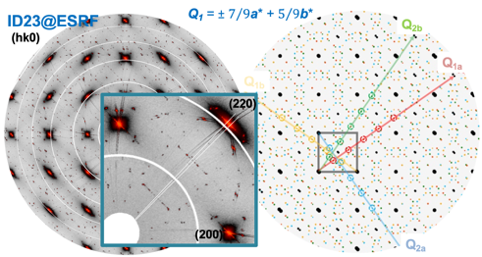
The structural characterization of materials is a mandatory prerequisite for developing functional materials and an absolute necessity for materials science researchers and engineers. To interpret diffraction patterns, structures, microstructures, and so on, a detailed understanding of crystallography, structural analysis, and the instruments used is essential. This knowledge is built from the ground up, gradually leading to an understanding of how to characterize materials using both standard and sophisticated diffraction methods. The course also includes laboratory work on powder and single-crystal diffractometers, enabling students to acquire the skills needed to correctly use and interpret diffraction data. Thefirst-semester portion of the course focuses primarily on X-ray diffraction and electron microscopy, while the crystallography component continues in thesecond semester with topics such as symmetry, structure determination, and structure refinement, as well as neutron scattering and magnetic structure analysis.
This lecture consists of two parts:
(1): Crystallography:
This section is primarily devoted to familiarizing students with structural analysis and its applications. Following a brief introduction to the concept of the reciprocal lattice and the use of space groups in crystallography, the lecture focuses on structural analysis using diffraction methods, including powder and single-crystal X-ray and neutron scattering. This involves gaining an understanding of related techniques—such as the use of powder and single-crystal diffractometers—as well as the techniques and software currently used for structure refinement. The aim of the course is to provide a basic understanding of the principles behind the software, rather than simply using the programs blindly. Students will also collect single-crystal diffraction data using a high-performance 4-cycle diffractometer equipped with a 2D area detector, as well as perform magnetic structure analysis using neutron diffraction methods.
Simple inorganic structures: Space groups, X-ray, neutron, and synchrotron sources, interaction of X-rays, electrons, and neutrons with matter, reciprocal lattice, concept of the Ewald sphere, powder diffractometers, single-crystal diffractometers, orienting matrix, Patterson method, structure refinement from powder or single-crystal data, magnetic structure analysis, magnetic space groups,
(2): Electron microscopy:
In this section, we will focus on electron microscopy through flipped classroom sessions. We will discuss the following topics: electron sources, lenses and aberrations, sample preparation, electron diffraction, structural and chemical analysis, and imaging techniques.
Hourly volumes*:
CM: 33 hours
Time: 6:00 p.m.
Objectives
Introduction to the Structural Characterization of Condensed Matter Using Diffraction Methods at Different Correlation Lengths.
The objectives of the transmission electron microscopy section are to provide a solid foundation in electron microscopy so that students can apply appropriate methods for characterizing materials. The expected skills for this section include a detailed understanding of the principles of an electron microscope (scanning and transmission modes) and the ability to describe and schematically represent the instrument and its specific features.
Students will become familiar with diffraction methods and structure refinement methods based on powder and single-crystal diffraction data, which are analyzed both manually and using state-of-the-art software.
The flipped classroom approach promotes student engagement and active participation. This method of learning helps students master the material and share it with the class.
Class Hours
- Electron Microscopy, Crystallography - TutorialTutorials6:00 p.m.
- Electron Microscopy, Crystallography - LectureLecture33 hours
Knowledge Assessment
Full CC
Course Outline
Crystallography:
- A brief review of symmetry and space groups
- Introduction to Structure Refinement (Single-Crystal and Powder Methods)
- Magnetic structures studied by neutron diffraction
- Structure determination from single crystals (experimental and theoretical)
- Structure determination from powder diffraction data (experimental and theoretical)
- Applications of Fourier series to structure determination and refinement: from the Patterson method to difference Fourier analysis
- Phase transitions, crystal twinning, and related changes in the direct and reciprocal lattices
- Contrast variation and anomalous scattering, along with the determination of the absolute structure
- Electron microscopy:
- In this section, we will focus on electron microscopy through flipped classroom activities. We will discuss the following topics: electron diffraction, diffraction patterns, electron sources, lenses and aberrations, sample preparation, electron diffraction, structural and chemical analysis, and imaging techniques.
Additional Information
Administrative contact(s):
Master's in Chemistry Office Master's in Chemistry @ umontpellier.fr
Bibliography
- Transmission Electron Microscopy: A Textbook for Materials Science, by Davis B. Williams and C. Barry Carter
- Physical Principles of Electron Microscopy, Ray F. Egerton, Springer
- and C. McKie: *Essentials of Crystallography*, Blackwell Scientific Publications
- Borchardt-Ott: *Crystallography: An Introduction*, Springer
- Als-Nielsen, D. McMorrow: *Elements of Modern X-ray Physics*
- Massa: Crystal Structure Determination, Springer
- Stout-Jensen: X-ray Structure Determination, Academic Press
- L. Squires: Introduction to the Theory of Thermal Neutron Scattering, Oxford, Cambridge University Press
- Neutron and Synchrotron Radiation for Condensed Matter Studies, Parts I and II, Springer; Editors: Baruchel, J., Hodeau, J.-L., Lehmann, M.S., Regnard, J.-R., Schlenker, C. (Eds.)